The Problem with Ozone

Ground level ozone is a problem and I’m not sure we know about it.
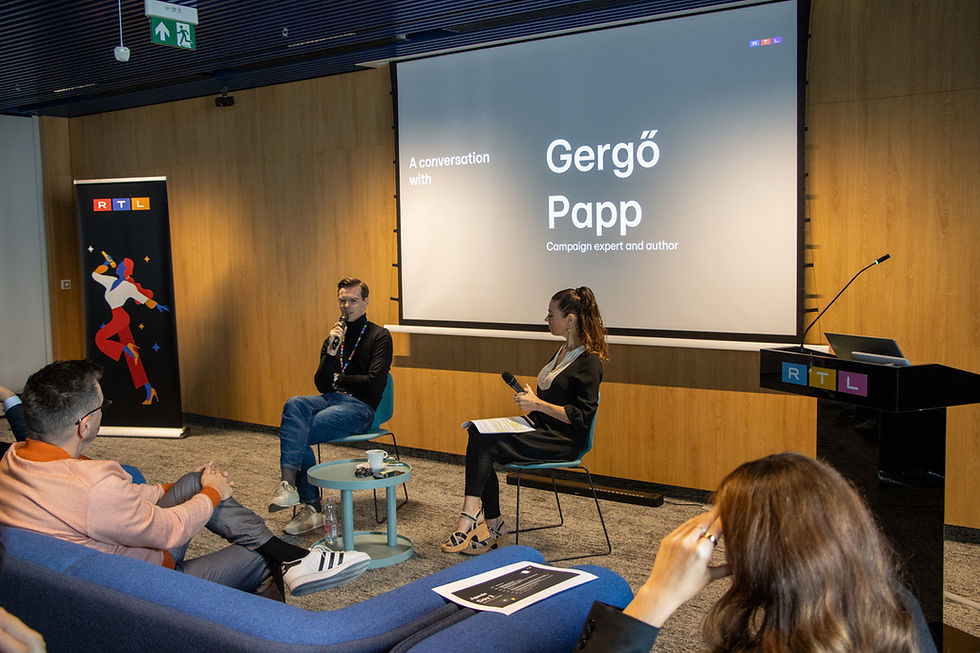
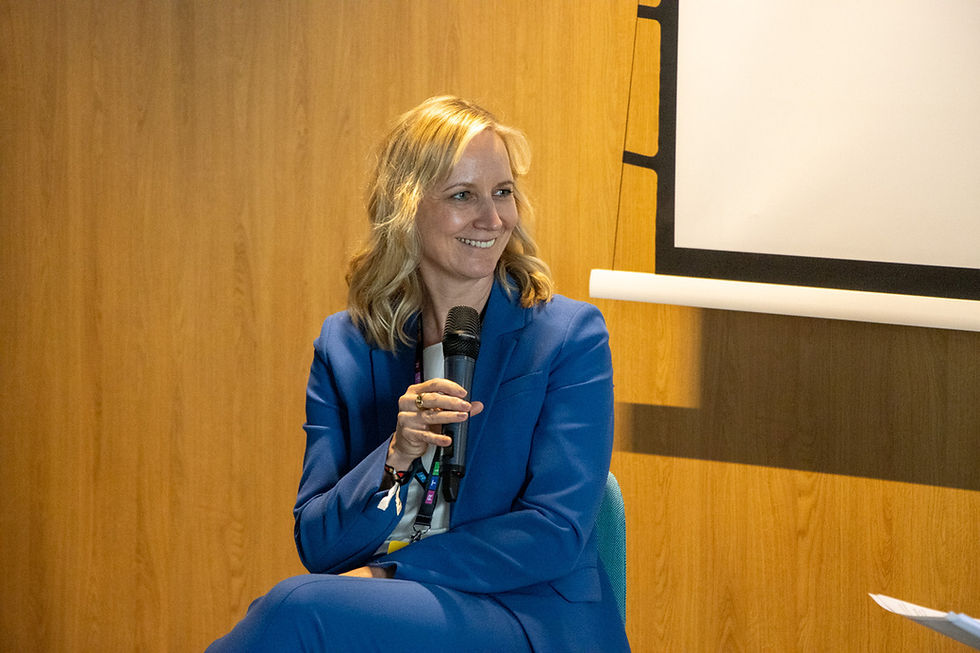
This week the Copernicus Atmosphere Monitoring Service, CAMS, released their first CAMS Atmosphere Watch and I got to moderate the media launch.
Copernicus is the European Union’s Earth observation programme and generates HUGE amounts of data. This data is available for FREE and OPENLY. As a side note, there are probably many more down stream businesses which could be created from this open source data.
CAMS Atmosphere Watch has focussed on three things:
Ground level ozone
Wildfires
Dust
As their Director, Laurence Rouil says “Air pollution does not stop at borders”
Let’s start with Ozone
If you’re as old as me, you’ll remember the news around ozone holes.
Discovered in the mid 80s by three scientists from the British Antarctic Survey, the ozone above the troposphere (the troposphere is where most of our weather happens) is crucial to block most of the harmful UV radiation entering Earth.
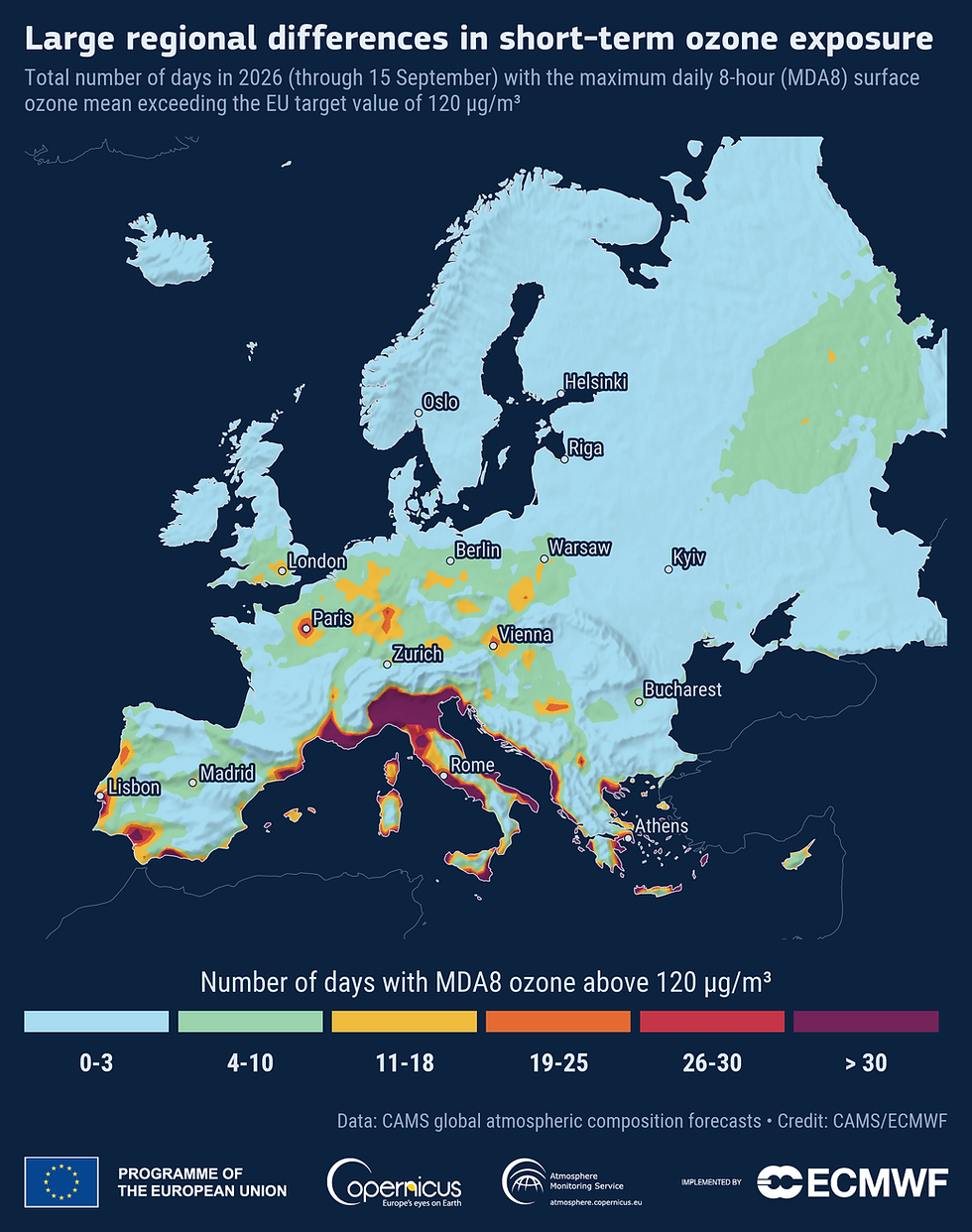
Ground level ozone is created when pollutants like nitrogen oxides and volatile organic compounds react with sunlight and high temperatures. These pollutants are created by transport, industry, domestic solvents and wildfires for example
Now, it turns out that with increasing temperatures, heat-waves and human-induced air pollution, in 2026 so far, almost 40% of the GLOBAL population is exposed to dangerous levels of ground-level ozone and this affects people with asthma and other lung diseases the most.
According to the WHO, World Health Organisation, guidelines, only 5% of the world’s population has been exposed to ‘good’ levels of ozone.
Asia is the most severely impacted, followed by EUROPE and then North America.
90% of Asia is exposed to an ozone level which fits into the WHO’s poor to extremely poor categorisation; 50% for Europe and the worst places in Europe are? Northern Italy and southern France.
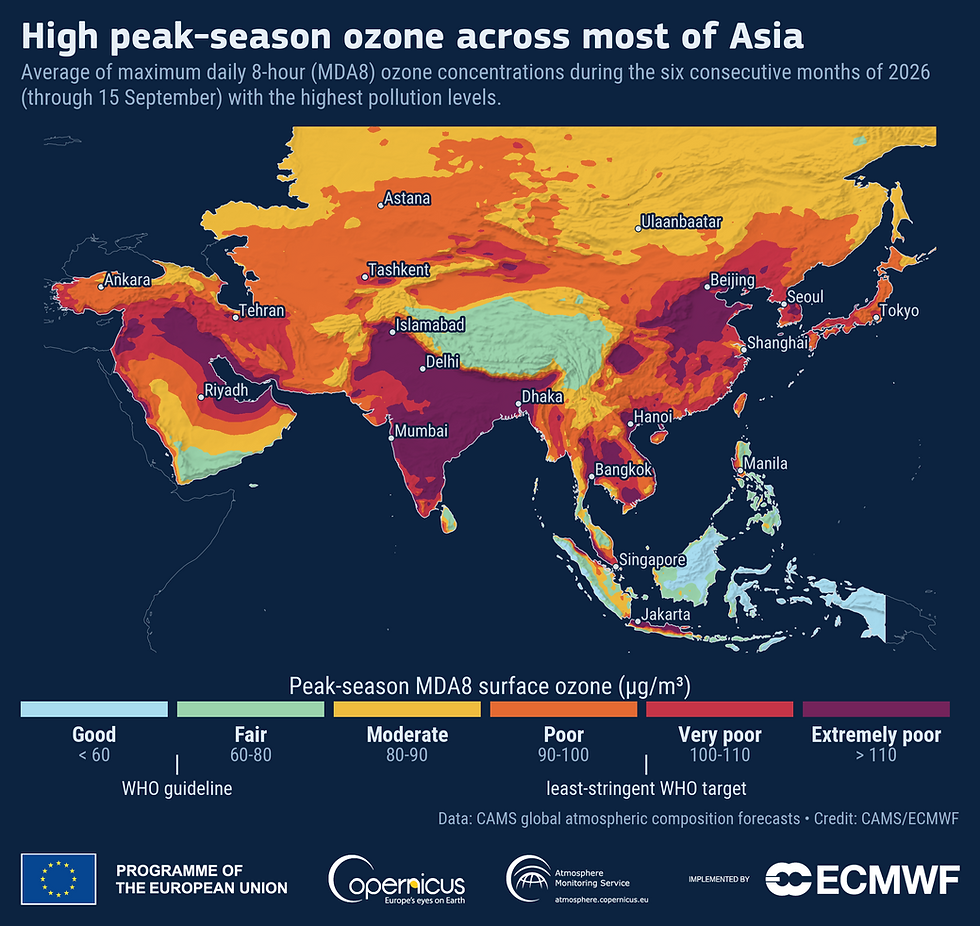
Perhaps ironically, Oceania, which includes Australia and New Zealand, has the best ground level ozone readings, whilst continuing to suffer from some of the worst ozone hole radiation exposure.
Ground level ozone also affects the ability of crops to grow.
Wildfires
This is another focus of CAMS because wildfire and biomass burning release a wide range of pollutants, fine particulate matter, greenhouse gases, nitrogen oxides and volatile organic compounds.
We all witnessed raging wildfires this year across the world.In France, the Gironde and Landes regions; in Spain the Avila province.
In France and Spain more than 50,000 hectares of land was burned in each country, with tens of thousands of people evacuated. It was one of the largest evacuations in France since World War II.
Belgium also had the worst wildfire for a century, with these smoke columns travelling across Luxembourg, Germany and Poland.
Canadian wildfires in the Northwestern Territories and Ontario caused a blanket of smoke to spread across Canada into the US and threatened the World Cup Final - it was only saved due to storms and rain which cleaned up the air.
In Asia, intense fires started in late July in Indonesia. I happened to spend much of August travelling in Indonesia and saw some of the effects of this - access to Mount Bromo for example was cut off due to wildfires.
Due to the onset of El Niño, this natural cycle of hotter and drier conditions often occur, but of course creates carbon emissions. The fires were mostly focussed on the island of Borneo and the Indonesian provinces of West and Central Kalimantan. These vast, and very precious regions, are difficult to manage once fires start.
Dust
Every year 2,000 million tons of sand and dust enter our atmosphere. The Global Dust Belt runs from China and Mongolia’s Gobi Desert across the Arabian Peninsula to the Sahara.
Dust is reflected in persistently high coarse particulate matter (PM10). Now this dust does not stay in the dust belt.
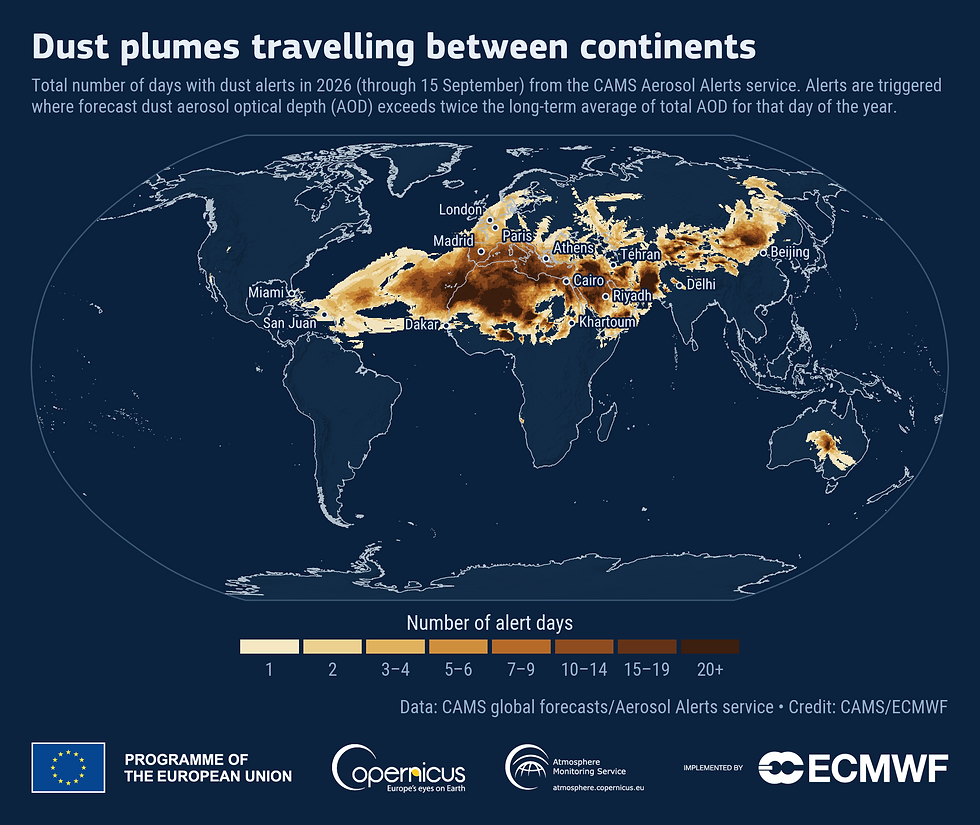
Saharan dust travels well into Europe and we’ve even seen the remarkable episode of the Alps having snow turn organs.
So what’s the issue with all of this wildfire particulate matter, and sand and dust, and ozone?
It’s our health.
And in fact the effects of these environmental situations has been long overlooked it turns out.
The other story here, one that’s very close to my beliefs, is that we have one shared world, we are one humanity, and political borders don’t count for much at all when it comes to systems that have no borders.
So thank you Copernicus! Thank you to all the scientists who work on monitoring the air around and above us. This is European tax payer money working for the good of all humankind.
Great post, Lisa. Would love to see some links to data/materials when ready. I'm also glad to see CAMS has been active moving data to cloud-native formats which allows not just for easy and free access (old way: put a NetCDF file in an AWS bucket, for instance) but also more efficient ways to query complex data in time series through protocols such as w/ zarr (saw this post here: https://forum.ecmwf.int/t/access-to-our-arco-era5-data-lake-zarr-store/15123). More on zarr here FYI: https://www.earthmover.io/blog/what-is-zarr/