After Orbán: The Rise of Péter Magyar

Things have changed in Hungary. Orbán is out, Magyar in.
So how does a man from a highly privileged lineage oust Orbán who’s been in power, and in control of all of the levers that make power happen, for so long? In fact, Magyar was, for many years, inside Fidesz - the party behind Orbán.
There’s an episode in 2024 which involved the pardoning of a scandal. Magyar’s then wife, Judit Varga, a former justice minister, was tangentially involved. Magyar secretly recorded his wife and released this publicly. Allegations of domestic abuse are also on record.
All of this is to say that, as a person and husband, Magyar’s behaviour is questionable. But what do people vote for? Did Hungary need a leader who showed that nothing, not even family ties, would stop him taking Orbán down?
It’s not the first time that a leader’s personal behaviour or value-scale is unconnected to the art of political campaigning.
Peter Magyar was voted in as Prime Minister of Hungary on 9 May this year with his Tisza party. He bypassed the biased state-owned media by using social media himself. 43% of the Hungarian population are on Facebook - this was the first method of successful communication, and notably text based social media rather than video.
Perhaps the stickiness of having to read something adhered to the voter in a different way to video and photo.
Although they were used, of course, too. YouTube, then Instagram and TikTok were all deployed in the battle for votes. Traditional media was last in line.
In 2024, one Partizán interview with Magyar was watched 2.7 million times (the population of Hungary is 10 million).
So when a candidate decides to up-end the old order, as we’ve seen played out multiple times in the last decade, where is the voice of regulated media compared with unregulated social media? Who creates the news agenda?
On top of social media, Magyar met the people. He walked and walked. 250km he walked, over the border into Romania to meet Hungarian diaspora. Demonstrably young (45), strong, fit, defiant. He showed the electorate that he could take on the monolith that was Orbán and his ilk.
And there was more to this meeting of people in real life. For years, ‘spirals of silence’ had pocked the landscape of rural Hungary. People were too scared to speak out about Orbán in case a neighbour or colleague reported them (echoes of Communist whispers). ‘Tisza Islands’ of confidence were created around the country.
So, now that we live in the era of influencer politicians, what happens when they’re in power. How is the work divided between doing the work and demonstrating that you’re doing the work.
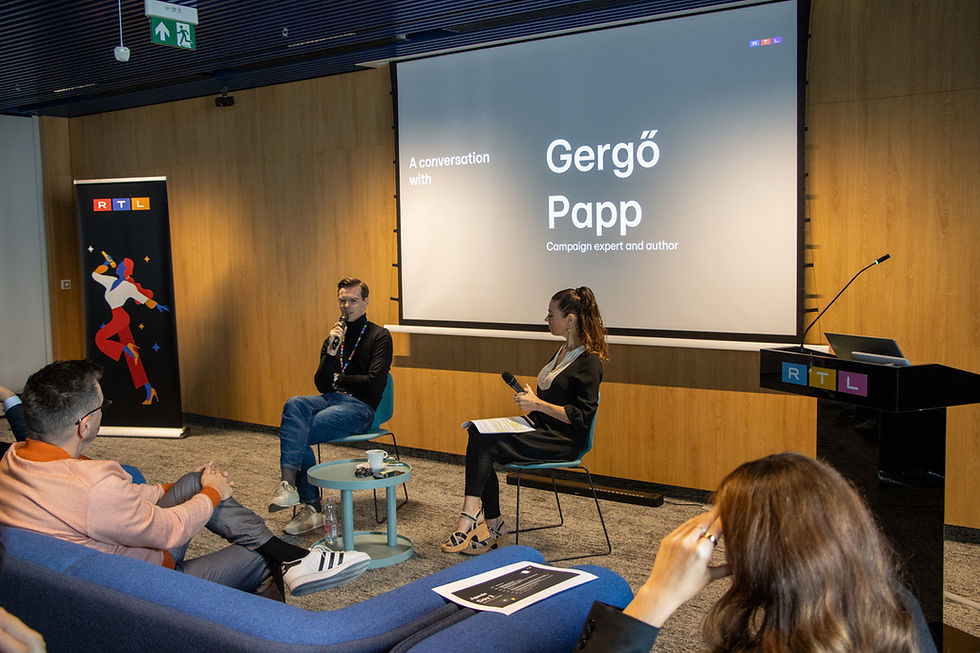
When I asked Gergő Papp if it’s more important to have ONE leader, whom you put your trust in, or a party - he said its the leader, and we don’t have to like them as a person, we need to believe they’ll get the ‘job’ done.
And so it is - the power of personality in politics.
Was not it ever thus?
Gergő Papp is a Hungarian campaign expert, political consultant and author. Founder of political consultancy Agenda Setting, Gergő has advised on national, European Parliament and local election campaigns and previously worked in the communications team of the Momentum Movement.
In 2026, he published Overflowed – TISZA’s Road to Victory, a book examining the rise of TISZA and its path to electoral success and is on the bestseller list in Hungary.
Comments